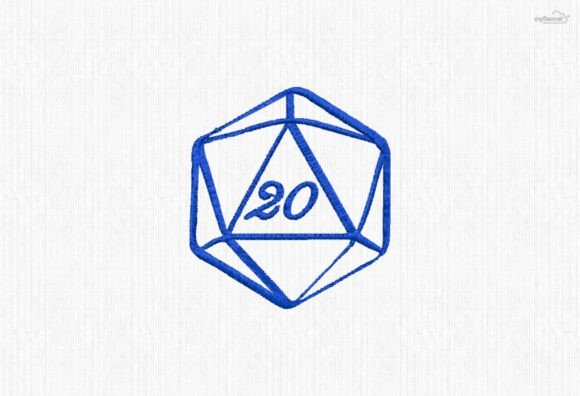
D20 Natural 20 Machine Embroidery Design
First Impression: Bold, Playful, and Instantly Recognizable
As an embroidery designer who’s prepped over 200 craft fair booths—and shipped thousands of handmade products—I opened the D20 Natural 20 Machine Embroidery Design file with one question: “Will this stop someone mid-aisle?” The answer is yes. It reads bold but not aggressive, geek-chic but not niche-only, and it lands perfectly in that sweet spot where tabletop RPG fans, casual crafters, and gift shoppers all pause and smile. There’s zero ambiguity in its intent: it’s a celebration of the roll that changes everything. No florals, no script, no minimalist abstraction—just confident geometry, clean lines, and built-in storytelling. That makes it ideal for craft fair product displays where visual clarity wins over subtlety.
Where It Shines on Handmade Goods
On a natural canvas tote bag? Outstanding. The D20 Natural 20 Machine Embroidery Design holds its shape beautifully at 4–5 inches wide—large enough to read from three feet away, small enough to avoid overwhelming the fabric. On aprons, it works best centered just below the pocket or subtly angled on the bib—adding personality without competing with functional details. For tea towel embroidery, I recommend placing it in the lower corner or along the hem; the clean edges prevent visual clutter against busy kitchen backdrops. As an embroidered patch? Absolutely viable—but only if stitched with medium-weight backing and cleanly finished edges. It reads clearly even when cut small (2.5”), though I’d avoid going under 2” unless using high-density thread and tight stabilizer control.
On caps, proceed with caution: the flat top of the D20 works well on structured front panels, but avoid curved crowns unless you’ve tested stitch pull and distortion. Pillow covers and fabric pouches are home runs—the design scales elegantly and adds instant thematic cohesion to a gaming-themed boutique line. And for giftable handmade items like mini market bags or embroidered key fobs? It adds premium handmade quality without demanding extra labor.
Production Realities: What You Need to Know Before You Hoop
This isn’t a “load-and-go” machine embroidery design—but it’s not finicky either. The D20 Natural 20 Machine Embroidery Design balances detail and durability smartly. There’s no micro-lettering, no fragile filigree, and no overlapping fill areas that risk thread nesting. That said, check your stitch density before batch production: dense center fills can cause puckering on lightweight linen or textured towels. Use cutaway stabilizer for knits and tear-away for stable cottons. Always test on scrap fabric matching your final product’s weight and texture—especially for dark fabric, where thread contrast becomes critical for legibility.
Hoop size matters here. Most versions will fit comfortably in a 5x7 hoop, but verify before cutting files—some iterations include optional outlines or shadow layers that expand the footprint. If you’re planning commercial embroidery for resale, confirm licensing terms: this digital embroidery file falls under Games Leisure and Embroidery categories, but commercial use permissions must be explicitly stated by the creator. Never assume.
Selling Power: Why It Converts at Craft Fairs and Online
In person, the D20 Natural 20 Machine Embroidery Design creates instant conversation. At my last fair, a single embroidered tote bag with this design drew more questions—and sales—than an entire rack of floral monograms. Why? Because it signals identity, community, and joy—not just decoration. Buyers don’t just buy a bag; they buy into a moment, a memory, a shared inside joke. That emotional hook lifts perceived value instantly.
For Etsy sellers and small shop owners, this design performs exceptionally well in listings. It photographs cleanly across backgrounds, scales beautifully in printable mockups, and pairs effortlessly with themed bundles (“RPG Gift Set”, “Geek Mom Collection”). Its recognizability means less caption explanation needed—your title and alt text can focus on use case (“tote bag design”, “apron embroidery”) rather than decoding meaning. And because it’s inherently repeatable, it supports consistent brand voice across product lines without feeling formulaic.
Design Notes Every Embroidery Business Owner Should Follow
- Always test the design on scrap fabric—not just cotton, but your actual production fabric (e.g., terry cloth for towels, twill for caps).
- Check thread contrast on both light and dark substrates. A single-color version may need two thread options (e.g., charcoal gray + cream) to maintain readability.
- Review spacing between elements—especially if layering with text or icons. Crowding kills clarity at booth distance.
- Confirm hoop size compatibility before digitizing adjustments or combining with other design assets.
- Inspect stitch density in curved or angular zones—D20s have sharp vertices; poor digitizing can cause skipped stitches or tension issues.
- Use the right stabilizer: cutaway for stretchy or unstable fabrics, tear-away for crisp cottons and linens.
- Create at least one real mockup—not just a digital preview. Light, texture, and drape change everything.
- Compare fabric colors side-by-side before committing to a full run—natural light reveals undertones screens hide.
- Confirm commercial licensing before selling finished products. This is non-negotiable for ethical and legal compliance.
Final Verdict: A High-Return, Low-Risk Design Asset
The D20 Natural 20 Machine Embroidery Design isn’t just another digital embroidery file—it’s a strategic tool for creative entrepreneurs. It bridges fandom and function, stands out in crowded markets, and translates seamlessly from physical booth display to polished Etsy listing. It elevates a simple tote bag into a statement piece, turns a tea towel into a collector’s item, and gives every small shop product an edge in memorability. For craft fair sellers, handmade shop owners, and digital sellers alike, this design delivers reliable ROI: fast recognition, strong engagement, and effortless storytelling. Just remember—great design deserves thoughtful execution. Test, refine, and let the Natural 20 do the rest.