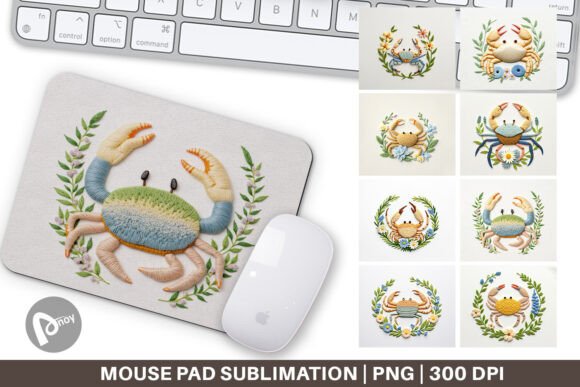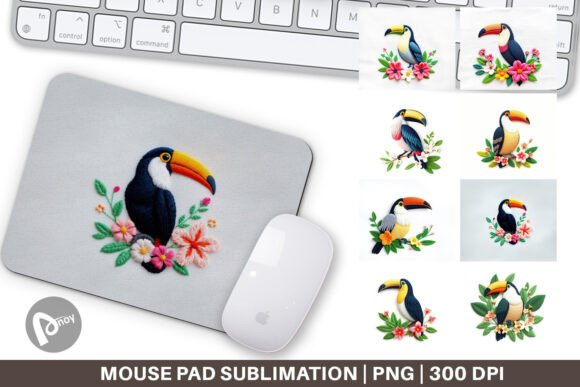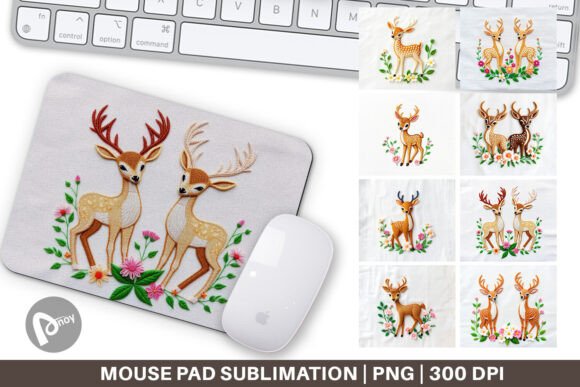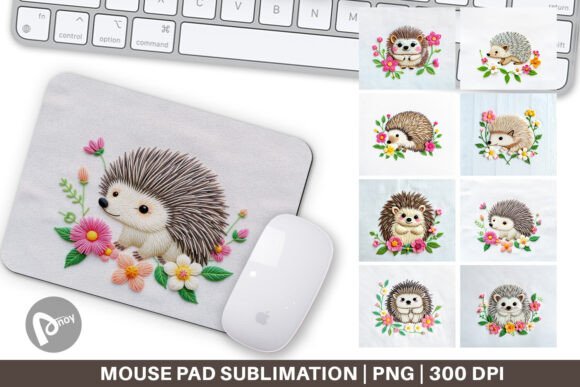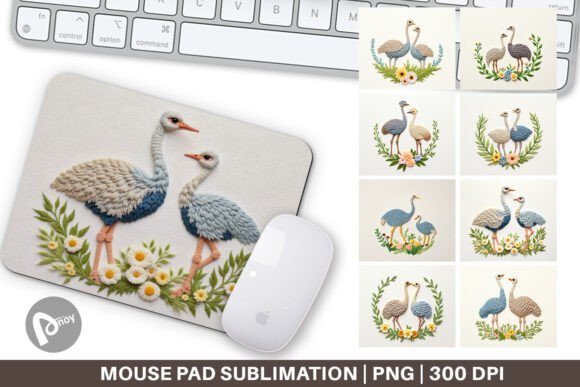
Mouse Pad Ostrich Embroidery
A Friendly, Playful Brand Mark with Real Merch Potential
As an embroidery designer who’s digitized over 2,000 small business logos and custom patches, my first impression of Mouse Pad Ostrich Embroidery is immediate: it reads as warm, approachable, and intentionally lighthearted—ideal for creative studios, pet brands, bakeries, or boutiques that want to stand out without sacrificing professionalism. The title hints at sublimation use, but the core asset—a PNG file set (8 files, 9.5 x format)—is actually a strong starting point for machine embroidery design adaptation. Though labeled under Illustrations and Graphics, this isn’t just clip art; it’s a visual hook with clear merch versatility.
Where Mouse Pad Ostrich Embroidery Shines in Small Business Use
This design excels where personality meets practicality. On embroidered patches, it works beautifully as a front-pocket accent for café aprons or boutique tote bags—its balanced proportions hold up at 2.5”–3.5” width without losing charm. For cap embroidery, place it cleanly on the front panel or side gusset; its rounded silhouette avoids awkward stretching across curved surfaces. As a chest logo on staff uniforms or branded work shirts, Mouse Pad Ostrich Embroidery communicates friendliness and craftsmanship—critical for handmade product businesses wanting to reinforce authenticity.
It also translates well to customer-facing items: stitched onto reusable tote bags for local events, heat-applied (with embroidery backup) on product packaging tags, or even scaled down as a sleeve detail on artisanal apparel. Etsy sellers and crafters report higher engagement when using playful yet polished marks like this one—it signals care without pretension, helping buyers connect emotionally before they even read your shop description.
Smart Placement & Key Limitations to Respect
While versatile, Mouse Pad Ostrich Embroidery demands thoughtful execution. Avoid using it below 2” tall on patches—fine details (like subtle feather texture or beak contour) may collapse or stitch poorly on dense fabrics. Cap fronts under 2.25” wide risk distortion; always test on a real cap blank before bulk production. It’s not ideal for high-wear zones like shirt cuffs or heavily textured canvas unless paired with ultra-stable cutaway stabilizer.
Dark uniforms? Confirm thread color contrast early—what reads clearly on a white PNG may vanish in navy or charcoal without strategic color blocking or outline stitching. Also, avoid placing it directly over seams or stretchy knit fabric without proper hooping support. If your small business merch includes frequent washing (e.g., bakery aprons), opt for matte polyester threads and tighter satin fill to maintain definition over time.
Strengthening Brand Identity—Beyond Aesthetics
Mouse Pad Ostrich Embroidery does more than decorate—it reinforces brand identity through consistency and tone. When used across aprons, caps, and tote bags, it creates visual rhythm that builds recognition faster than text-only logos. Customers remember how a brand *feels*: playful, grounded, whimsical. This design delivers that intuitively, supporting trust by signaling intentionality—not just “we added a logo,” but “this reflects who we are.”
For handmade product sellers, it elevates perceived value: an embroidered ostrich on a linen tea towel or ceramic studio tote feels curated, not generic. And because it avoids overused motifs (hearts, arrows, minimalist line art), it helps small businesses differentiate in crowded markets—from farmers’ markets to Etsy search results.
Practical Embroidery Designer Notes for Production
Before digitizing Mouse Pad Ostrich Embroidery for commercial embroidery, follow these field-tested steps:
- Test in black and white first—verify silhouette clarity and negative space balance without color distraction.
- Check small patch viability—scale it to 2”, then 1.75”, and assess if key features remain legible and stitchable.
- Review thread color contrast—especially against common uniform fabrics (khaki, navy, heather grey).
- Inspect spacing and density—tight curves or overlapping elements may need manual cleanup to prevent thread nesting.
- Confirm hoop size compatibility—standard 4”x4” hoops work for most placements, but larger versions may require 5”x7” for clean fills.
- Test on real fabric—run samples on your most-used substrates (cotton twill, poly-canvas, denim) with appropriate stabilizer layers.
- Create a printable mockup for client approval—show it on actual garment types (cap, tote, apron) to align expectations.
- Compare beside existing design assets—does it harmonize with your current font suite, icon set, or color palette?
- Verify commercial licensing—since this is delivered as a digital embroidery file via PNG, confirm usage rights cover small business merch, embroidered patch resale, and custom apparel before launching.
Final Thought: A Strategic Asset, Not Just a Design
Mouse Pad Ostrich Embroidery is more than a cute illustration—it’s a functional, adaptable piece of brand infrastructure. For embroidery shops digitizing for local clients, it’s a low-risk, high-return option that converts quickly into aprons, patches, and staff gear. For Etsy sellers and craft businesses, it adds memorable character to handmade product lines without diluting professionalism. Used thoughtfully—with attention to scale, fabric, and context—it becomes part of your visual language, not just decoration. Just remember: every great embroidered patch starts with smart review, not just pretty pixels.