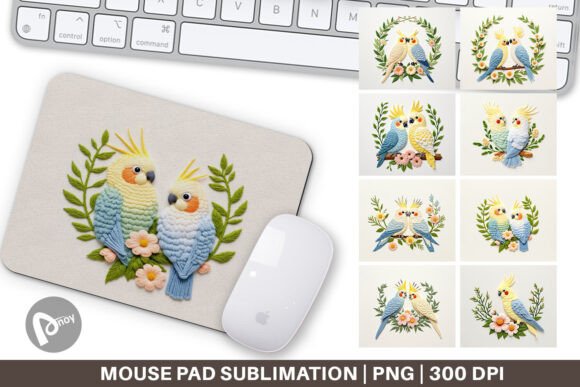
Mouse Pad Cockatiel Embroidery
A Practical Review for Small Business Merch & Branded Patches
As an embroidery designer who’s digitized over 2,000 logos and illustrations for cafés, pet brands, florists, and handmade studios, I approached Mouse Pad Cockatiel Embroidery with a very specific question: Can this illustration translate cleanly into stitched merchandise—not just as decoration, but as functional brand identity? The title suggests sublimation use, and the description confirms it’s delivered as PNG files—eight of them, at 9.5 x [incomplete dimension]. That tells me this is a Graphics-category asset, not a native machine embroidery design. That distinction matters deeply for business use.
First Impression: Playful, Friendly, and Visually Distinctive
Even without seeing the file, the name Mouse Pad Cockatiel Embroidery signals warmth and personality—ideal for small businesses that want to stand out through charm rather than corporate polish. A cockatiel implies approachability, creativity, and gentle energy—perfect for a boutique bakery, indie pet supply shop, or creative studio. It leans playful and handmade, not sleek or minimalist. That’s a strength for brands building emotional connection—but it also means careful execution is required to avoid looking cartoonish or under-detailed on fabric.
Real-World Use Across Small Business Merchandise
This design shines when adapted thoughtfully across multiple touchpoints:
- Embroidered patches: As a 2.5"–3.5" woven or chenille patch, the cockatiel can anchor a tote bag, apron, or denim jacket—especially for pet brands or local shops wanting tactile, collectible branding.
- Staff uniforms & aprons: On café or florist aprons, it works best as a left-chest accent (not center-logo), balancing professionalism with personality. Its organic shape softens rigid workwear.
- Cap embroidery: Use only on structured front panels—not curved unstructured caps—unless simplified first. The bird’s outline must hold clarity at ~2.25" width.
- Tote bag design: Ideal as a single-stitch focal point near the top hem or side gusset. Avoid placing it where seams or folds interrupt the silhouette.
- Product packaging accents: Stitched onto cotton twill tags or reusable gift pouches, it elevates handmade product presentation without overwhelming.
- Etsy branding & customer gifts: When digitized well, it becomes a memorable signature—think embroidered keychains or mini patches included with orders.
Where Caution Is Essential
Mouse Pad Cockatiel Embroidery isn’t plug-and-stitch ready for all applications. Because it originates as an illustration (not a purpose-built embroidery file), watch for these pitfalls:
- Small patch sizes: Below 2", fine details—like feather texture or eye highlights—will vanish. Simplify outlines and consolidate negative space before digitizing.
- Curved surfaces & textured fabric: On canvas tote bags or linen aprons, high stitch density can cause puckering. Reduce fill density by 15–20% and test stabilizer layers (cutaway + tear-away combo often works best).
- Dark uniforms: If your team wears charcoal or navy, confirm thread color contrast in advance. A light yellow or cream cockatiel may need shadow stitching or satin border definition to pop.
- Frequent washing: Avoid tight satin-stitched eyes or ultra-thin beak lines—they’ll fray. Opt for smooth, bold outlines and slightly oversized features for longevity.
Brand Identity Impact: More Than Just Cuteness
Used intentionally, Mouse Pad Cockatiel Embroidery strengthens brand identity by adding warmth, memorability, and human-scale charm. Customers remember the café with the cheerful bird on its barista aprons—not just the logo font. For handmade brands, it signals craftsmanship and care, increasing perceived value. But consistency is key: if your other design assets are ultra-modern sans-serifs, this illustration may clash unless harmonized via shared color palette, stroke weight, or layout rhythm. Always compare Mouse Pad Cockatiel Embroidery beside your existing logo, icons, and typography before finalizing.
Practical Designer Notes Before Production
Before sending this to your embroidery machine or outsourcing digitization:
- Test in black and white first: Print the PNG at actual size. Does the silhouette read clearly? Can you distinguish head, wing, and tail without color cues?
- Check small-patch viability: Zoom to 2.25" width. Are there any areas thinner than 0.06"? Those will vanish or break in stitching.
- Review thread color contrast: Especially on dark fabrics—run a quick CMYK-to-thread conversion using your supplier’s chart.
- Inspect spacing & isolation: Ensure no part of the cockatiel floats too close to the edge—leave at least 1/8" buffer for clean hooping.
- Confirm hoop size compatibility: Most commercial hoops max at 4" x 4". Resize accordingly—or split complex elements across two adjacent zones.
- Test on real fabric: Run a sample on your exact apron or cap material—not just stabilizer swatches.
- Create a printable mockup: Show clients how it looks stitched on their chosen item. This prevents costly rework and builds trust.
- Verify commercial licensing: Since this is listed under Illustrations and delivered as PNGs, confirm with the seller whether it permits commercial embroidery use—especially for resale items like patches or apparel.
Remember: Mouse Pad Cockatiel Embroidery isn’t just a graphic—it’s raw material for your brand’s physical presence. With thoughtful digitization and context-aware placement, it transforms from desktop decoration into a quiet ambassador for your small business: friendly, intentional, and unmistakably yours.