Honeymoon Machine Embroidery Font DST Review
As an embroidery designer specializing in commercial branding and small business merchandise, I approach every new typeface with a critical eye. While the Honeymoon Machine Embroidery Font DST is marketed with a soft, romantic touch for Valentine’s Day projects, my primary concern is always production viability. Can this handwritten-style script actually hold up on a busy café apron or a boutique tote bag? After reviewing the digitizing structure and testing its application for branded goods, I have found that this font offers unique opportunities for businesses wanting to convey warmth and artisanal quality, provided it is used within specific technical parameters.
First Impressions: Balancing Romance with Commercial Viability
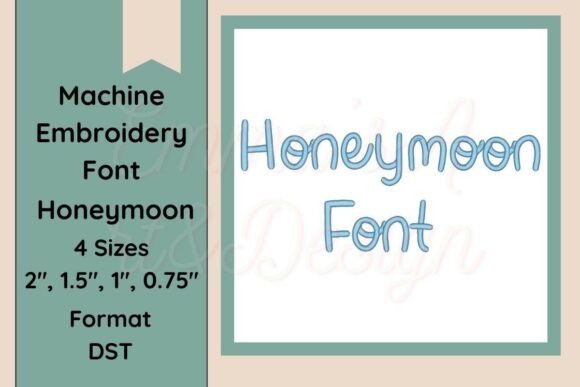
Upon loading the Honeymoon Machine Embroidery Font DST into my software, the first thing that stands out is the organic flow of the lettering. Unlike rigid block fonts often used for corporate uniforms, this typeface mimics natural handwriting. For a small business owner, this visual personality is a powerful tool. It immediately signals "handmade," "personal," and "crafted." In an era where customers crave authentic connection, using a font that feels human rather than industrial can significantly enhance brand identity.
However, from a digitizer's perspective, script fonts are notoriously tricky. The connecting stitches between letters can create tension issues or excessive thread buildup. Fortunately, this machine embroidery design appears optimized for stability. The stitch pathing seems logical, reducing unnecessary trims and jumps, which is crucial when you are running a batch of fifty staff shirts. The aesthetic is undeniably elegant, but it avoids being overly frilly, making it versatile enough for a florist shop logo or a bakery label without looking out of place.
Real-World Applications for Small Business Merchandise
The true test of any embroidery file is how it performs on actual merchandise. Based on the stitch characteristics of Honeymoon, I recommend this font for specific small business merch categories where a softer touch adds value.
- Boutique Apparel and Tags: This font excels as a secondary text element. Pair it with a bold sans-serif logo for the main brand name, and use Honeymoon for taglines like "Est. 2024" or "Handmade with Love." The contrast creates a premium, layered look on custom apparel.
- Apron Embroidery: For cafes, bakeries, and salons, aprons are high-wear items. The flowing nature of this script works beautifully across the chest area of an apron, adding a welcoming vibe for front-of-house staff. It feels less sterile than standard block lettering.
- Tote Bag Design: Canvas totes are a staple for Etsy sellers and creative studios. The Honeymoon font has enough weight to stand out against the coarse texture of canvas without getting lost. It transforms a simple utility bag into a fashionable accessory that customers will want to reuse.
- Customer Gifts and Packaging: If you offer embroidered napkins, handkerchiefs, or gift pouches, this font is ideal. Its romantic undertone makes it perfect for wedding favors or thank-you gifts, reinforcing customer loyalty through thoughtful presentation.
Technical Limitations: Where to Exercise Caution
While the Honeymoon Machine Embroidery Font DST is charming, it is not a universal solution. As a professional, I must advise against using this font in scenarios where legibility and durability are compromised by physics.
Avoid Tiny Patch Sizes
If you are creating a 2-inch embroidered patch for a uniform sleeve, this script may be too delicate. Handwritten fonts rely on fluid connections; when scaled down excessively, those connections become fragile points of failure. The stitch density required to maintain the shape at small sizes can lead to puckering or thread breaks. For tiny patches, stick to simpler satin column fonts and save Honeymoon for larger chest logos or back prints.
Cap Embroidery Challenges
Cap embroidery presents unique difficulties due to the curved surface and structured buckram. Script fonts with horizontal flow can distort when wrapped around a cap front. Unless you are highly experienced with cap framing and compensation settings, test this font extensively before committing to a production run. The risk of misaligned connections is higher here than on flat garments.
Fabric Texture and Washability
Be mindful of fabric texture. On high-pile fabrics like terry cloth or fleece, the fine details of a handwritten script can sink into the nap. You would need to use a heavy topping stabilizer, which might alter the hand-feel of the garment. Additionally, consider the end-use. If the item requires frequent industrial laundering (like restaurant linens), ensure your thread colors and backing choices match the delicacy of the font. Fine scripts generally show wear faster than bold block letters.
Impact on Brand Perception and Customer Trust
Choosing the right typography in embroidery is a strategic business decision. When a customer sees clean, well-executed script embroidery, they subconsciously associate the brand with attention to detail and care. The Honeymoon Machine Embroidery Font DST facilitates this association. It moves a product away from "generic promotional item" toward "curated handmade product."
For Etsy sellers and independent creators, this distinction directly impacts perceived value. A tote bag embroidered with a generic system font might sell for $15, while the same bag featuring a beautifully stitched, bespoke-feeling script could command $25. The font acts as a visual cue for quality. However, this only holds true if the execution is flawless. Poorly hooped or stabilized script looks messy and unprofessional, which damages trust. Therefore, mastering the technical application of this digital embroidery file is just as important as the design choice itself.
Designer Notes for Successful Production
To ensure your finished product meets professional standards, follow these practical guidelines when implementing Honeymoon in your workflow:
- Create a Printable Mockup First: Before stitching, generate a printable mockup to scale. Print it out and place it on the actual garment or item. This helps verify that the size and placement feel right relative to the product dimensions. Digital screens can be deceiving regarding physical scale.
- Test in Black and White: Run a sample stitch-out using black thread on white fabric (or vice versa). High contrast reveals spacing issues, tension problems, and registration errors that colored threads might hide. Inspect the connections between letters closely.
- Verify Stabilizer Compatibility: Because this is a script font, proper stabilization is non-negotiable. Test different stabilizer combinations based on your substrate. For knits, use cut-away backing to prevent stretching; for wovens, tear-away may suffice. Always use a water-soluble topping for textured fabrics to keep the stitches crisp.
- Check Hoop Size and Tension: Ensure you are using the smallest appropriate hoop size for the design to minimize fabric movement. Loose hooping is the enemy of script fonts. Re-check your machine’s top thread tension; script requires balanced tension to prevent the bobbin thread from showing on top.
- Confirm Licensing for Commercial Use: Before selling any merchandise featuring this font, strictly verify the license terms included with the design assets. Ensure you have the rights for commercial embroidery and physical product sales. Never assume a font is free for business use without documentation.
- Evaluate Alongside Other Assets: Compare the Honeymoon font beside your existing logos and icons. Does it complement your current design assets, or does it clash? Visual consistency builds recognition. If your brand is ultra-modern and geometric, this romantic script might create cognitive dissonance unless used very intentionally as an accent.
The Honeymoon Machine Embroidery Font DST is a valuable addition to the toolkit of apparel decorators and handmade brands, specifically those targeting markets that appreciate warmth and craftsmanship. By respecting its technical boundaries and leveraging its emotional appeal, you can elevate your custom apparel and merchandise from standard to signature. Always prioritize testing and proper stabilization to ensure that the romance of the design translates into a durable, professional reality for your clients.