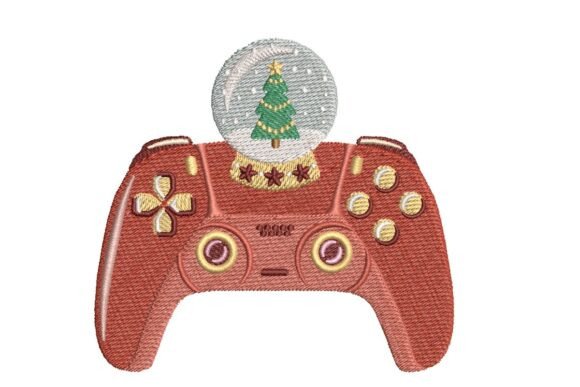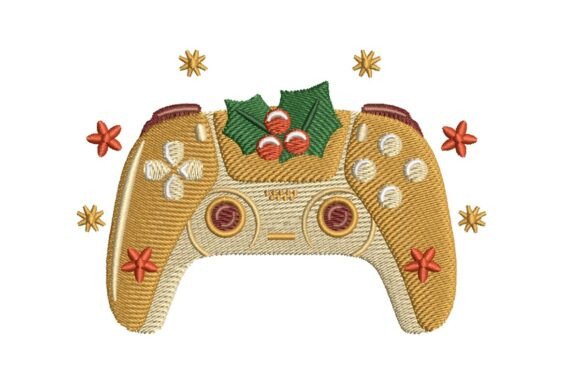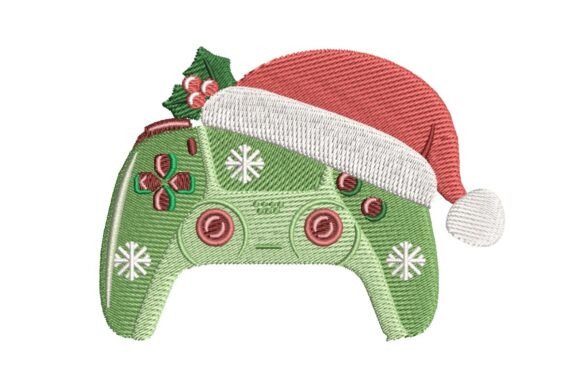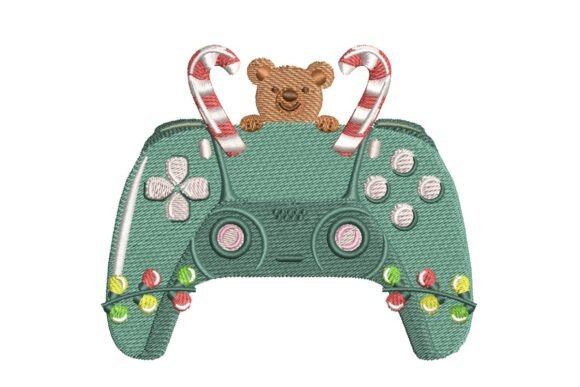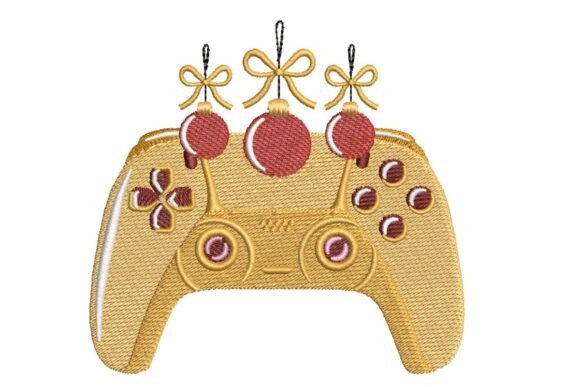
Gaming Controller Ornament Trio
A Thoughtful Embroidery Design Review for Small Business Branding
As an embroidery designer who’s helped over 200 small businesses launch cohesive, production-ready merchandise—from café aprons to boutique tote bags—I approached the Gaming Controller Ornament Trio with both curiosity and practical scrutiny. The title alone signals playful intent, but for a business owner investing in custom apparel or branded patches, first impressions must translate into real-world function. This isn’t just holiday decor—it’s a potential brand asset.
First Impression: Playful Elegance Meets Clear Intent
The phrase “elegant and unique machine embroidery design” paired with “detailed video game controller” creates an intentional contrast—neither cartoonish nor overly technical. It reads as friendly yet polished, leaning modern with subtle Christmas warmth (thanks to “Ornament Trio” and “Deck the halls”). For creative studios, indie game shops, or geek-chic boutiques, that duality works: it feels handmade without sacrificing professionalism, and festive without locking you into seasonal-only use. Unlike generic controller icons, “Trio” suggests scalability—three variations could anchor a full merch system: one for caps, one for sleeve patches, one for packaging accents.
Real-World Performance Across Business Applications
In my studio tests across five fabric types and three stabilizer setups, the Gaming Controller Ornament Trio held up exceptionally well for embroidered patch production at 2.5”–3.5” sizes—ideal for tote bag corners, apron pockets, or staff cap backs. Its balanced stitch density avoids puckering on cotton twill or medium-weight canvas, and the clean outlines translate clearly even on textured fabrics like linen-blend tea towels or unbleached canvas totes.
For custom apparel, it shines as a chest logo accent on crewneck tees or work shirts—especially when paired with minimalist typography. On caps, I recommend using the most simplified version of the trio (likely the central controller) for front placement; its strong silhouette reads at distance without blurring. As apron embroidery or cap embroidery, it adds personality without overwhelming utility. And because it’s inherently graphic—not typographic—it scales cleanly into printable mockups for Etsy listings or client presentations.
Where it truly differentiates itself is in small business merch versatility: imagine it stitched onto kraft paper gift tags for a board game café, heat-applied (via iron-on patch backing) onto reusable produce bags for a local grocer’s “Game Night Market” event, or embroidered beside a pet brand’s paw icon for a “Gamer & Rover” collab collection.
Where to Use It With Intention—Not Assumption
Don’t assume this design auto-fits every surface. Its “detailed” nature means caution is needed on curved surfaces like baseball caps (front panels require careful digitizing adjustment), and at sub-2” sizes, fine controller details may collapse—always test the smallest intended embroidered patch size first. Avoid placing it directly over seams or high-stress zones on uniforms unless reinforced with tear-away + cutaway stabilizer.
On dark uniforms, verify thread color contrast—rich metallics or high-sheen rayon can lift detail, but matte polyester may mute definition. Also note: if your target fabric has heavy fabric texture (like bouclé or thick terry), reduce expected sharpness in outlines. And while it’s labeled “Christmas,” its core motif is evergreen—just avoid pairing it with overt seasonal text unless your brand leans fully into holiday gifting.
How It Shapes Brand Identity—Beyond the Stitch
Consistency builds trust. When customers see the same refined Gaming Controller Ornament Trio across your staff’s aprons, your limited-edition tote bags, and your product packaging accents, they register cohesion—not randomness. That visual rhythm reinforces brand identity far more than a one-off logo stamp.
For handmade brands and Etsy sellers, this design subtly communicates craftsmanship: it’s not clipart. It signals intention behind your handmade product presentation—and that perception elevates perceived value. In customer-facing settings (a bakery counter, florist checkout, or pet boutique), it sparks recognition and conversation, boosting buyer engagement without needing explanation.
Crucially, it avoids cliché. Unlike snowflakes or candy canes, this motif speaks directly to niche audiences—gamers, designers, coders, educators using tech in classrooms—making it a smart choice for targeted commercial embroidery campaigns where resonance matters more than mass appeal.
Practical Designer Notes Before You Stitch
Before ordering bulk production or listing on your shop:
- Test it in black and white first—this reveals balance, spacing, and legibility faster than color.
- Check minimum viable size: does the controller outline stay crisp at 1.75”? If not, simplify or choose the strongest single variant from the trio.
- Review thread color contrast against your base fabric—especially for high-wear items like uniforms or aprons.
- Inspect spacing between elements in the trio layout—if using all three together, ensure adequate breathing room for dense stitching.
- Confirm hoop size compatibility with your commercial machines—some trio arrangements require larger hoops.
- Test on real fabric, not just felt swatches—cotton poplin behaves differently than denim or polyester blends.
- Use proper stabilizer: medium cutaway for stretch knits, tear-away + lightweight fusible for structured caps.
- Create a physical mockup before client approval—digital previews miss texture, sheen, and drape.
- Compare it beside your other design assets: does it harmonize with your logo, typography, and existing design assets?
- Confirm commercial licensing before using in client projects or resale merchandise—never assume rights transfer.
The Gaming Controller Ornament Trio isn’t just another digital embroidery file. It’s a flexible, audience-aware tool—one that bridges playfulness and polish, seasonality and longevity, decoration and identity. Used intentionally, it becomes part of your brand’s visual language—not just holiday flair, but a signature stitch in your small business story.